2027 NAMBA Signals Continued Market Pressures in Part D

Summary
As NAMBA increases by more than 20% for a fourth consecutive year, the end of the PDP Premium Stabilization Demonstration adds to market uncertainty.On July 28, the Centers for Medicare & Medicaid Services (CMS) released the Part D national average monthly bid amount (NAMBA) and base beneficiary premium (BBP) for contract year (CY) 2027, providing one of the early indicators of the financial pressures continuing to shape the Part D market into the 2027 plan year.
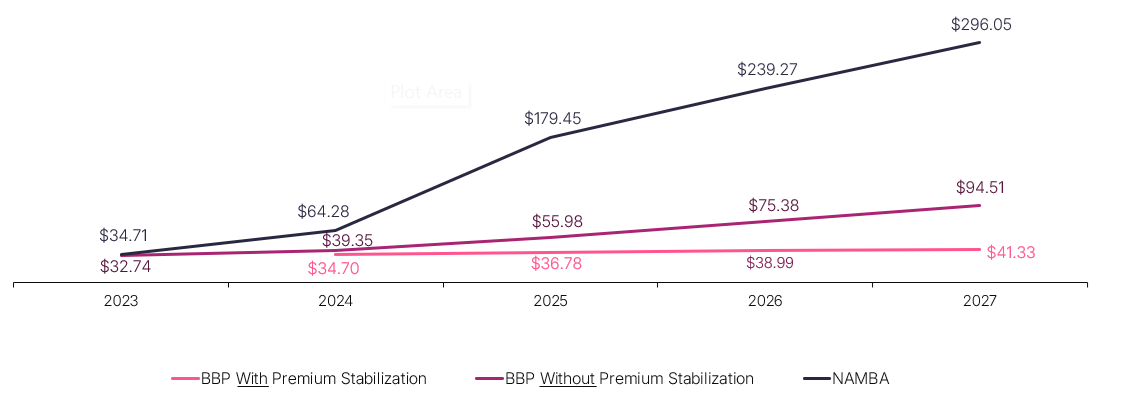
The NAMBA, which represents the average of Part D plan bids for providing the basic Part D benefit, will increase by 24%, to $296.05, in 2027. This is an increase of more than 750% (from $34.71 in 2023) above pre-Inflation Reduction Act (IRA) plan bids, reflecting the higher expected costs of providing the standard Part D benefit following implementation of IRA benefit redesign. The significant increase in the NAMBA indicates that both Medicare Advantage Prescription Drug plans (MA-PDs) and standalone Prescription Drug Plans (PDPs) are continuing to face rising benefit costs, likely driven in part by higher utilization and drug spending resulting from the redesigned benefit. As seen in recent years, these costs are experienced differently by MA-PDs and PDPs, with MA-PDs having more tools to offset higher costs and maintain lower premiums.
Across all Part D plans, the IRA premium stabilization program has limited increases in the base beneficiary premium (BBP) by capping annual growth at 6% for 2024–2029. Under this program, the BBP will increase to $41.33 in 2027; it would have been significantly higher if this program were not in place (Figure 1). However, because the BBP reflects the average premium for basic benefits across all Part D plans (including both PDPs and MA-PDs), individual plan premiums for 2027 are likely to vary substantially depending on plan bids and whether a plan’s premium is above or below the market average.
Figure 1: Trends in Part D Bids and Premiums
In 2025 and 2026, CMS implemented a separate Part D Premium Stabilization Demonstration for standalone PDPs. This voluntary demonstration helped mitigate higher premium increases for PDPs by providing plan sponsors with an additional subsidy payment—$15 per enrollee per month in 2025 and $10 per enrollee per month in 2026—and placing a limit on individual plan premium increases. 2027 was expected to be the final year of the Part D Premium Stabilization Demonstration. However, CMS announced that demonstration will not be in effect for 2027, noting that plans have had experience with the redesigned benefit to inform their bids.
Given rising PDP premiums and the decrease in PDP options in recent years, the conclusion of the PDP Premium Stabilization Demonstration could put further upward pressure on PDP premiums for 2028 and accelerate market shifts. Without additional policy changes, PDP sponsors may continue to modify their offerings and formulary strategies to manage growing financial pressures.
In parallel with these market changes, policymakers have been evaluating potential approaches to improve Part D market stability while balancing beneficiary affordability and access. On June 16, Senate Finance Committee Democrats released a Request for Information (RFI) seeking stakeholder feedback on various drug pricing policies, including options to further increase beneficiary affordability and stabilize Part D premiums beyond the PDP Premium Stabilization Demonstration. The RFI highlights several potential policy proposals, including changes to Part D risk adjustment, modifications to the NAMBA calculation, and adjustments to manufacturer liability. As policy discussions continue, stakeholders should assess potential policy options and engagement strategies, including their implementation considerations and downstream implications for beneficiary access and the long-term stability of the Part D market.
Looking Forward
The NAMBA increase suggests that plan sponsors may continue making changes to Part D offerings as they adapt to the financial pressures of the redesigned benefit. The CY 2027 Medicare Advantage and Part D Landscape files and the Part D formulary files (expected in September and October, respectively) will provide insight into how plan offerings, benefit designs, and formularies will continue to evolve into the 2027 plan year. These changes could drive shifts in beneficiary enrollment patterns, with plan selection decisions becoming increasingly important in shaping beneficiary affordability and access. At the same time, continued policy discussions will influence the longer-term direction of the Part D market, as potential reforms seek to balance plan sustainability with beneficiary affordability and access.
To learn how evolving Part D market dynamics may affect your organization and how to evaluate the changing policy landscape, connect with us.
Services
produces measurable results. Let's work together.