What to Expect When You’re Expecting (to Submit an ICD-10-CM Code Request)

Summary
As NCHS guidance on ICD-10-CM code submissions requests evolve, stakeholders need to be aware of the new parameters to navigate each stage of the proposal with confidence.Background
The ICD-10 Coordination and Maintenance (C&M) Committee meets each spring and fall to review proposed changes to the International Classification of Diseases, Tenth Revision, Clinical Modification (ICD-10-CM) code sets, with the National Center for Health Statistics (NCHS) leading ICD-10-CM diagnosis discussions.
Since 2025, public meetings have focused solely on ICD-10-CM diagnosis codes and submissions have followed a defined process: a proposal deadline followed by a public meeting, then a 30- or 60-day public comment period, and finally implementation of approved changes. This year, the committee introduced significant changes that impact organizations submitting code requests, and particularly those working in the genetic and rare disease space.
Proposals for Ultra-Rare and Genetic Condition Codes Paused Through Spring 2027
Genetic conditions are currently distributed across multiple chapters of the ICD-10-CM and lack a consistent organizing framework, which creates challenges for classification, review, and long-term maintenance. During the March 2026 ICD-10 C&M Committee meeting, NCHS announced that proposals related to ultra-rare and gene-specific conditions are being paused while it develops organizing principles to support a clearer and more sustainable approach to classification.
During the 60-day comment period, which closed on May 15, NCHS sought input on how these proposals should be structured, reviewed, and maintained in the future. The public comments underscored the rare disease community’s interest in closing gaps that hinder diagnosis, research, insurance coverage, and access to care for ultra-rare and genetic diseases. As the agency works to establish those principles, interested parties should stay informed about upcoming committee discussions and remain prepared to adapt their strategies as the process evolves.
New proposals for these conditions are expected to be accepted for discussion at the March 2027 ICD-10 C&M meeting, once the necessary principles have been established. The guidance emerging from this process will likely shape how genetic and ultra-rare conditions are documented, reviewed, and ultimately coded.
What’s in the New Proposal Framework?
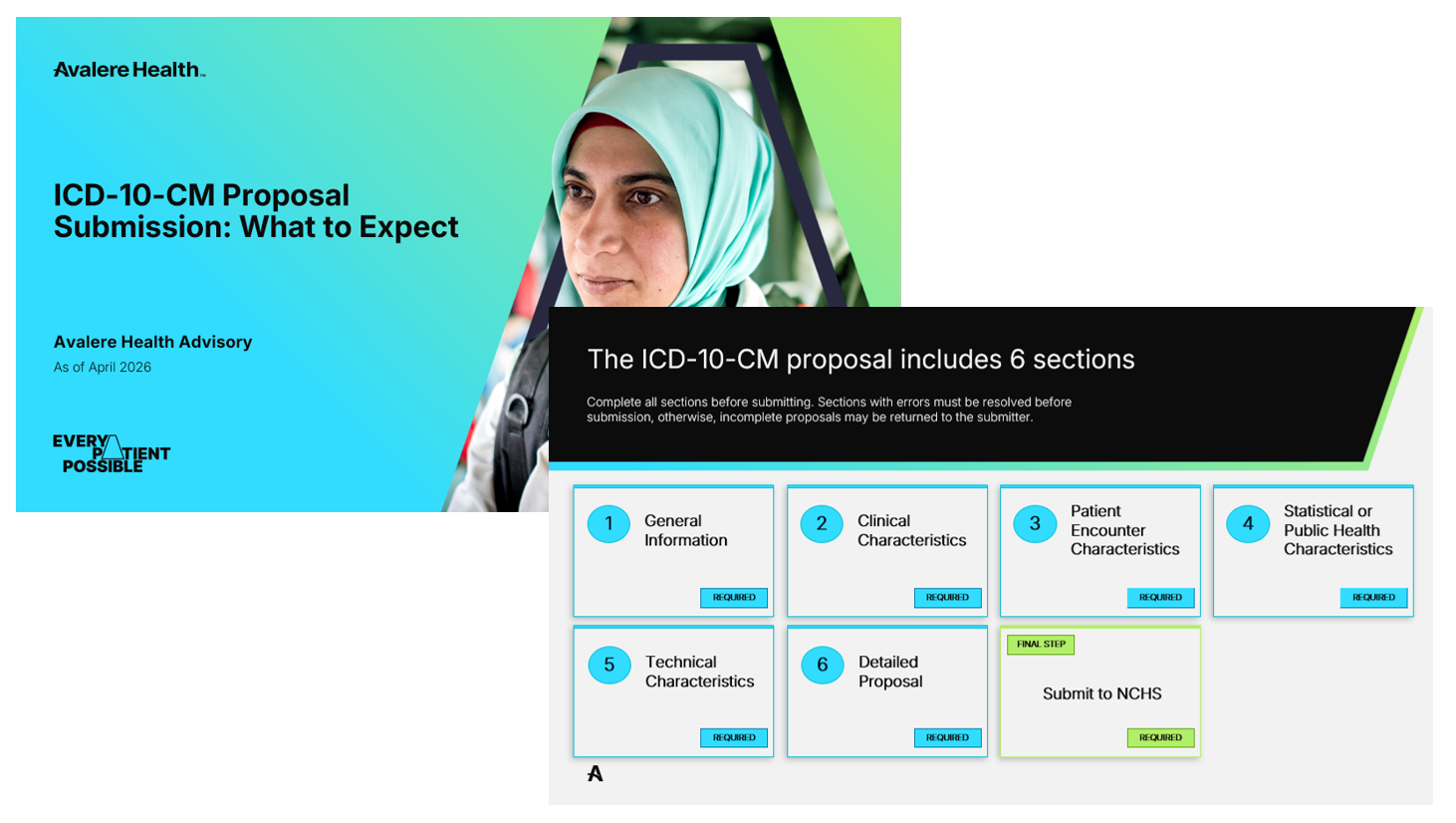
In April 2026, the CDC announced new ICD-10-CM proposal requirements that place a stronger emphasis on clarity, completeness, and alignment with classification principles. The updated guidance also introduces greater consistence to the process, requiring requestors to complete a formal proposal framework (as opposed to the prior free-text Word document) that includes clinical, patient encounter, statistical or public health, and technical information. Further, each submission must clearly define the clinical need driving the request, explain why a new or revised code is necessary, and show how the proposal fits within the ICD-10-CM code structure.
While the format has become more structured, the core expectations for a strong proposal remain unchanged. Proposals should continue to be grounded in credible clinical and scientific evidence, with sufficient detail to show how the condition is documented and understood in practice. Just as important, submissions should clearly distinguish the condition from related diagnoses and demonstrate why existing coding options remain insufficient.
These long-standing expectations underscore that strong proposals are built on a clear clinical rationale, well-supported documentation patterns, public health relevance, and technical classification considerations that together provide reviewers with a complete and compelling picture.
Avalere Health’s What to Expect Guide
It is crucial for proposals involving genetic and ultra-rare conditions to demonstrate strong clinical evidence, a precise classification strategy, and alignment with current NCHS expectations. This cannot be winged—careful planning is essential.
To assist with the ICD-10-CM code submission requests, Avalere Health has developed a What to Expect Guide that serves as a practical resource, explaining how the process works and how expert support can help move a proposal forward efficiently. The guide provides requestors with a clear overview of how proposals move from initial documentation through submission, while outlining the support available to help manage technical and administrative requirements along the way.
This resource is available as a fee-based offering and is designed to translate the NCHS request submission pathway into a clear, staged process for organizations seeking ICD‑10‑CM changes. It explains how the classification timeline, documentation expectations, and public comment mechanics interact, and describes how to manage technical, clinical, and administrative requirements.
The guide also outlines a formal approach to the comment period through tracking submission windows, preparing concise summaries of public comments, identifying recurring themes, and drafting evidence‑based rebuttals or clarifying statements when appropriate. It recommends proactive engagement with clinical experts, key opinion leaders, and specialty societies to consolidate authoritative commentary, and it documents best practices for submitting comments that align with classification criteria rather than reimbursement or policy arguments.
How Avalere Health Can Help
Avalere Health’s Advisory team brings deep experience in rare disease, ICD-10-CM code requests, and the development of evidence-based submission strategies. From assembling the application and drafting the two-page justification to compiling supporting literature and preparing materials for the Coordination and Maintenance meeting, the team supports each stage of the process with a focus on accuracy, efficiency, and clarity. Recognizing the complexity of coding applications for organizations without prior experience, these new requirements underscore the value of expert support and careful planning.
Avalere Health provides structured support to maximize success, minimize administrative burden, and improve the quality and credibility of the final submission. Contact us today or email Mariia Salova (mariia.salova@avalerehealth.com) to discuss how we can support your coding and reimbursement goals.
Services
produces measurable results. Let's work together.