How Rare Diseases Are Reshaping Evidence Generation Strategies

Summary
Rare diseases are reshaping evidence generation strategies, necessitating that all stakeholders incorporate novel approaches to data collection.Defining “Rarity” in the Modern Evidence Landscape
Rare diseases collectively represent a significant public health challenge despite their individual low prevalence. In the United States, a rare disease is defined under the Orphan Drug Act as one affecting fewer than 200,000 individuals; definitions vary internationally. Although each condition affects relatively few patients, more than 10,000 rare diseases have been identified worldwide, together impacting hundreds of millions of individuals.
Despite decades of regulatory incentives––including orphan drug designation, accelerated approval pathways, and other Food and Drug Administration (FDA) programs designed to stimulate drug development––most rare diseases still lack approved therapies. One challenge in bringing such products to market is evidence. Limited understanding of disease biology, delayed diagnosis, geographic dispersion of patients, and heterogeneous clinical presentation continue to create substantial challenges for generating robust clinical evidence. Consequently, manufacturers, regulators, clinicians, and payers are increasingly recognizing that evidence generation for rare diseases requires approaches extending well beyond traditional clinical trials.
Traditional Evidence Generation Faces Unique Constraints
Randomized, adequately powered Phase III clinical trials are the scientific gold standard for demonstrating therapeutic efficacy and safety. However, there are several challenges associated with meeting the standard requirements for conducting clinical trials spanning Phases I through III:
- Recruitment challenges: Small and geographically dispersed patient populations; international recruitment requirements across numerous sites; ethical concerns related to the recruitment of pediatric patient populations; and competition among multiple studies targeting the same limited patient population.
- Practical constraints associated with traditional clinical trial methodologies: Small sample sizes that reduce statistical precision; ethical considerations associated with placebo-controlled arms; and clinical heterogeneity that complicates patient stratification.
- Endpoint selection and natural history challenges: Limited understanding of rare disease progression stemming from a notable lack of well-characterized natural history data; and limited numbers of validated clinical outcome assessments, accepted surrogate endpoints, and established biomarkers predictive of long-term outcomes.
These factors often prolong enrollment timelines and increase development costs while limiting statistical power. As a result, sponsors often rely on alternative evidence packages that integrate multiple complementary data sources rather than a single definitive randomized trial. Developing meaningful data packages well in advance of FDA approval often requires substantial collaboration among researchers, patients, clinicians, and regulators before pivotal studies can begin and throughout development and commercialization phases.
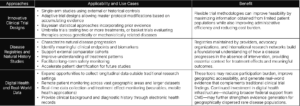
Expanding the Rare Disease Evidence Toolkit
Recognizing these limitations, regulators and sponsors are increasingly incorporating innovative evidence-generation strategies that complement traditional data collection methods.
Strategic Considerations for Manufacturers
Successfully developing therapies for rare diseases increasingly depends on integrating evidence planning throughout the product lifecycle rather than viewing clinical trials as standalone activities.
Manufacturers may consider a variety of strategies to strengthen their evidence generation approaches:
- Proactive regulatory engagement: Maintain frequent and ongoing dialogue with the FDA regarding trial design, appropriate and acceptable endpoints, and evidentiary expectations before and throughout the entire clinical development program. Potential FDA engagement options include pre-investigational new drug meetings, the Rare Disease Endpoint Advancement pilot program, and meetings with the Office of Orphan Products Development.
- Evidence integration: Develop comprehensive evidence generation strategies that combine clinical trials, registries, natural history studies, and real-world evidence into a cohesive package supporting regulatory, reimbursement, and clinical decision-making.
- Patient-centered development: Incorporate patient perspectives early and on an ongoing basis through patient-focused drug development meetings, patient preference studies, and advocacy partnerships to ensure clinical endpoints reflect outcomes meaningful to patients and caregivers.
- Early statistical planning: Engage statisticians during protocol development to identify innovative analytical methods appropriate for limited sample sizes.
- Global collaboration: Participate in international registries and multi-center research networks to maximize available patient populations and improve data quality across jurisdictions.
How We Can Help
As evidence expectations continue to evolve, successful rare disease development increasingly depends on generating integrated evidence that extends beyond the traditional clinical trial. Avalere Health partners with life sciences companies to design evidence generation strategies that leverage innovative trial designs, real-world data, patient registries, and regulatory engagement to support clinical development, market access, and long-term value demonstration across the rare disease landscape. Connect with us to learn more.
Services
produces measurable results. Let's work together.