Finding Clarity in Uncertainty: How Delphi Panels Generate Consensus-Driven, Publication-Ready Evidence

Summary
Delphi panels are a methodologically rigorous way to fill evidence gaps, build expert consensus, and translate that consensus into meaningful strategic action.For manufacturers and other healthcare stakeholders, traditional evidence doesn’t always tell the full story. Clinical trials, claims analyses, and published literature provide important insights, but they fail to illuminate other factors critical to decision-making such as evolving standards of care and evidence, emerging treatment paradigms and pathways, and payer expectations.
Enter Delphi panels.
Delphi panels offer a systematic approach for capturing expert input and judgement and turning it into actionable insights. As a result, expert consensus itself, rooted in the Delphi panel methodology, becomes a valued and accepted form of evidence.
What are Delphi Panels?
A Delphi panel is a scientific research method designed to achieve expert consensus. The panel is composed of expert stakeholders who go through multiple rounds of surveys and discussion, refining their perspectives and identifying areas of agreement along the way. For our and clients’ purposes, panel participants include intentionally selected clinicians, payers, researchers, health economists, and patients.
Figure 1. Bridging Evidence Gaps Through Expert Consensus
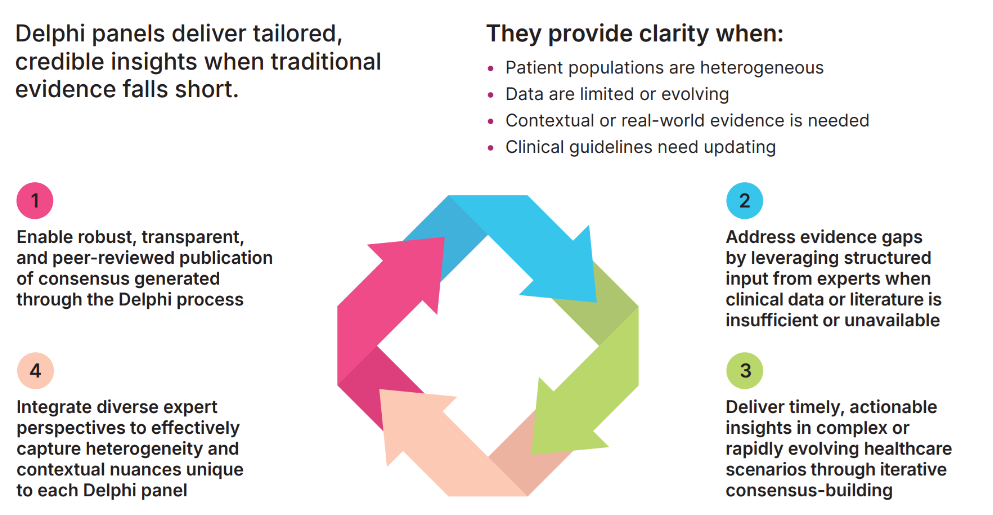
Unlike traditional market research or advisory boards, Delphi panels are purpose-built to generate methodologically based evidence. The approach produces:
- Credible consensus that can be quantitatively measured
- Actionable findings through a scientific and often IRB-approved or exempt process
- Results that are timely and cost-effective
The strength of the Delphi methodology lies in its ability to synthesize diverse perspectives into a unified view. Rather than relying on a single expert opinion, it systematically gathers and refines input from multiple stakeholders, resulting in consensus-driven evidence that can support decision-making across a wide range of applications. This methodology can support clinical guidance development, market access strategy, value communication, and evidence generation planning.
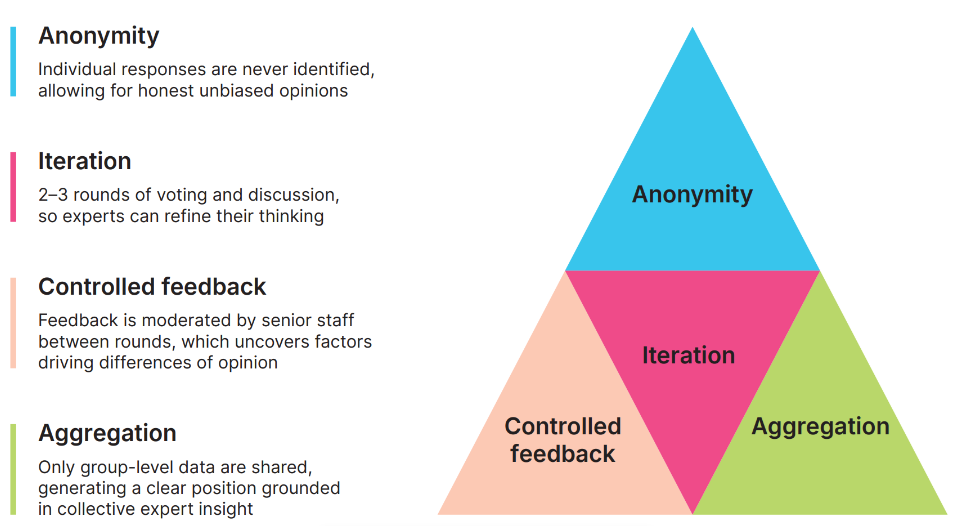
The Four Pillars of Delphi Research
Every panel is grounded in a strong methodological framework that is designed to produce results that stand up to scrutiny. The methodology has four pillars: anonymity, iteration, controlled feedback, and aggregation of responses.
Anonymity allows participants to provide individual perspectives that minimize the influence of hierarchy, reputation, or group dynamics. This helps reduce bias and encourages independent thinking.
Iteration enables participants to reconsider their views over multiple rounds as new information and group feedback emerge. Rather than forcing immediate agreement, consensus can develop gradually through reflection and refinement. Divergence of consensus also provides important evidence.
Controlled feedback ensures that participants receive structured summaries of the group’s responses between rounds. This provides transparency while maintaining the integrity of individual viewpoints.
Aggregation of responses allows consensus to be measured statistically, transforming individual opinions into defensible evidence.
Figure 2. The Four Pillars of a Delphi Panel
A Rigorous Yet Flexible Approach
Delphi panels are designed to balance scientific rigor with the flexibility needed to address real-world strategic questions. Every engagement begins with a clear understanding of the research question and decision that needs to be informed. Starting with the end in mind ensures that the research design, stakeholder selection, and consensus objectives remain aligned with the client’s ultimate goals.
From there, the process follows a structured methodology that combines quantitative measurement with qualitative context. Stakeholder engagement is maintained throughout the study, enabling participants not only to provide individual input but also to react to emerging themes and evolving consensus.
Figure 3. Delphi Panel Process Options at Avalere Health
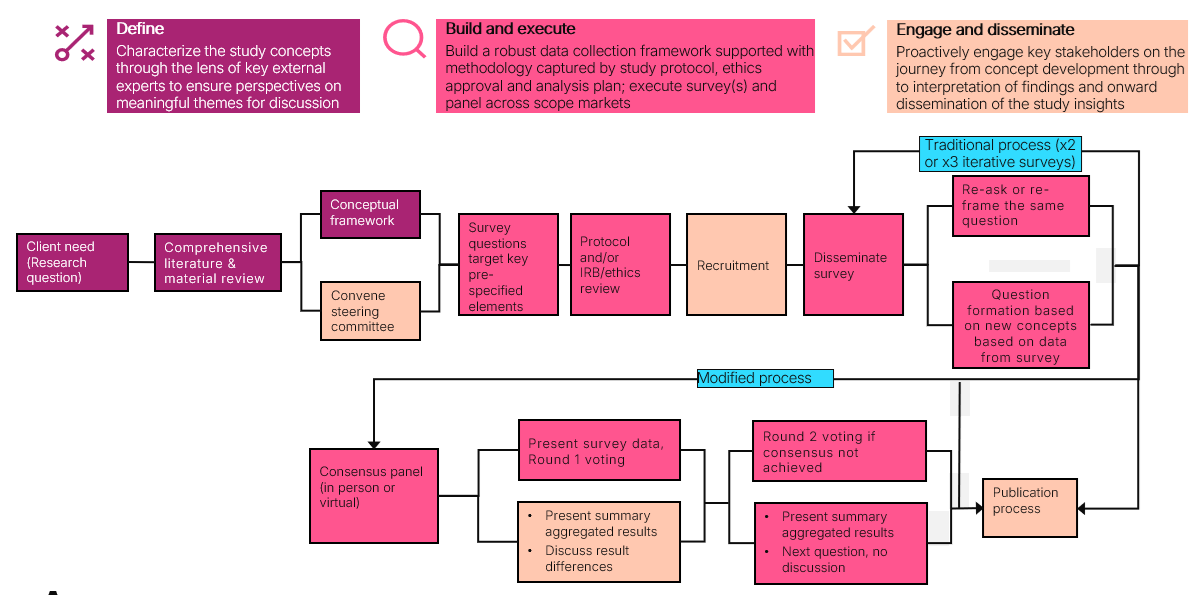 This integration of quantitative rigor and qualitative insight is what elevates the quality and relevance of the final findings.
Providing Greater Confidence Across Therapeutic Areas
Delphi panel can produce expert consensus statements, evidence to support value messaging, inputs for economic and outcomes models, strategic recommendations, and peer-reviewed publications or conference presentations, among other outcomes.
Regardless of the deliverable, the objective remains the same: providing decision-makers with greater confidence in areas where uncertainty exists. The Delphi methodology continues to gain momentum across healthcare research and strategy. In 2026, recent applications have included:
- Renaming polycystic ovary syndrome (PCOS) to polyendocrine metabolic ovarian syndrome (PMOS)
- Enhancing patient-centered Health Technology Assessment in spinal muscular atrophy
- Developing a care bundle to reduce surgical site infections
- Creating guidance on the definition and management of lipedema
- Establishing consensus on the importance of secondary stroke prevention
These examples highlight the versatility of Delphi research across therapeutic areas, stakeholder groups, and evidence-generation needs.
What Differentiates Avalere Health’s Approach
While the Delphi methodology itself is well established, the quality of outcomes depends heavily on execution. Avalere Health Advisory experts bring decades of experience conducting consensus-based research and is distinguished by three core strengths.
First, expert facilitation ensures balanced participation while minimizing bias throughout the process. Skilled moderation helps guide discussions toward genuine consensus rather than conformity.
Second, a multi-stakeholder perspective allows each panel to be tailored to the research question, engaging the right mix of experts across geographies, specialties, and decision-making roles.
Third, a strong focus on actionability ensures that findings do not remain as academic exercises. Consensus is translated into practical implications that support strategic planning, evidence generation, market access, and broader organizational decision-making.
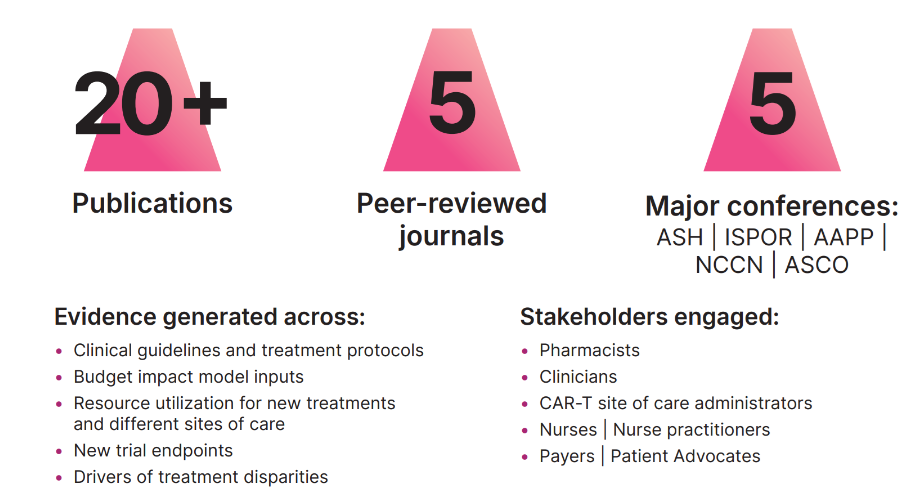
Figure 4. A Proven Track Record
Turning Consensus into Action
As healthcare decisions become increasingly complex, organizations need evidence generation approaches that can complement traditional data sources and address unanswered questions.
Delphi panels offer a powerful solution by creating evidence where gaps exist, aligning stakeholders around defensible insights, and transforming expert consensus into meaningful action.
In an environment defined by uncertainty, consensus-driven evidence can provide the clarity needed to move forward with confidence. We’d love to partner with you to identify where this approach could best support your current priorities. To learn more, connect with us.
Services
produces measurable results. Let's work together.